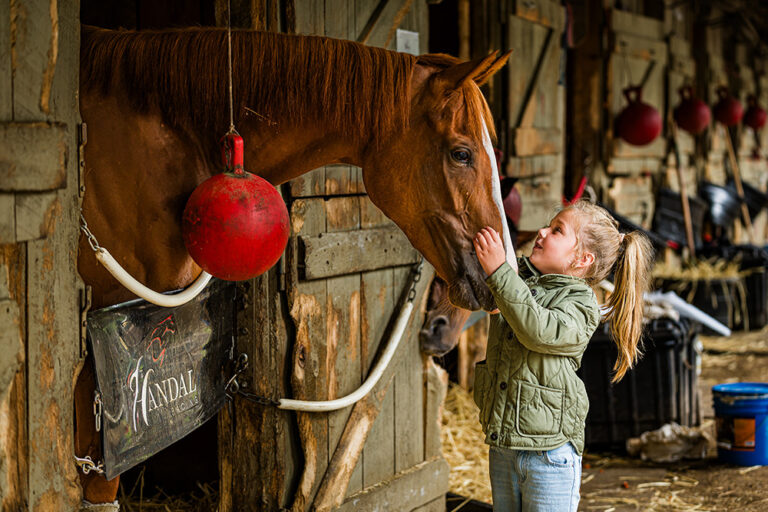
Photo Credit: Peggy Kohn
The Zilla Racing Stables Ownership Experience
Founded in June 2012, Zilla Racing Stables was created to offer partners a more personal, engaging, and rewarding way to experience thoroughbred ownership.
Located near Saratoga Springs, one of the most storied centers of American racing, ZRS is built for those who want more than a casual connection to the sport. Through fractional ownership, our partners enjoy the thrill, access, and pride of racehorse ownership in a way that is both meaningful and financially approachable.
A Closer Connection to the Sport
At ZRS, ownership is about far more than holding a percentage in a horse. It is about being part of the journey from the inside — following the horse’s development, sharing in the anticipation of race day, and enjoying the kind of access and insight that make the sport so compelling.
For many of our partners, the experience is much like supporting a favorite team, only on a far more personal level. The connection is real, the excitement is genuine, and the memories are lasting.
Designed to Be Personal, Transparent, and Immersive
We believe the ownership experience should feel connected from start to finish. That means timely communication, meaningful updates, real transparency, and the opportunity to enjoy the sport in a way that goes well beyond simply watching from the stands.
Whether it is visiting the barn, following a horse’s progress, celebrating in the winner’s circle, or sharing the experience with fellow partners, ownership with ZRS is designed to be immersive, informative, and memorable.
The Ultimate Racing Experience
Owning a racehorse is one of the most exciting experiences in sport. It brings together competition, passion, anticipation, and the rare opportunity to be part of something truly special.
At Zilla Racing Stables, our mission is to make that experience accessible, enjoyable, and unforgettable for every partner — whether you are discovering racing for the first time or deepening a passion that has lasted for years.
Benefits of Ownership
Owning a racehorse is unlike any other experience in sports. It offers excitement, anticipation, access, and the rare opportunity to be part of something truly special from the inside.
A Level of Access Few Sports Can Offer
As a licensed owner in New York, you receive NYRA credentials and an owner’s badge, which provide access to a range of privileges not available to the general public. These include complimentary clubhouse admission at all NYRA tracks, access to owner seating at Belmont and Aqueduct, and clubhouse admission at Saratoga.
Owners also receive horsemen’s parking, including at Saratoga, along with paddock passes that provide entry into one of the most exclusive and electric areas of the racecourse.
A True Behind-the-Scenes Experience
Ownership brings you closer to the sport in a way that simply cannot be replicated from the stands.
From the restricted barn area to the paddock to the winner’s circle, owners are able to experience the game at its most intimate level. You have the opportunity to see your horse in its daily environment, follow its development firsthand, and spend time around the trainers, riders, grooms, and staff whose dedication makes each performance possible.
For many owners, these moments behind the scenes become just as meaningful as race day itself.
The Zilla Racing Stables Difference
At Zilla Racing Stables, we believe the ownership experience should feel personal, informed, and connected.
Our partners receive access to private owner communication channels, including restricted website access and private text groups, so important information is always readily available. We place a strong emphasis on communication and transparency, including timely updates and full veterinary disclosure, so our partners always understand where things stand.
When available, partners also receive advance breeze schedules, quality photos, and breeze videos that bring the horse’s day-to-day progress to life.
Professional, Thoughtful Administration
We believe the business side of ownership should be handled with the same care and professionalism as the horses themselves.
ZRS provides detailed online invoicing and convenient payment options designed to make ownership simple and efficient. Purse earnings are credited monthly, and partners may request a check for any available credit balance.
Access Beyond Race Day
Owning with ZRS can also open the door to experiences beyond the racetrack itself.
Partners may be invited to attend yearling and two-year-old sales with us, offering a firsthand look at the process of evaluating and acquiring future runners. For many owners, this deeper involvement adds another rewarding dimension to the partnership experience.
A Community Built Around the Sport
While the access, excitement, and information are all valuable parts of ownership, one of the most lasting rewards is the community that comes with it.
Over time, many of our partners develop friendships through the stable that extend well beyond the races themselves. Shared anticipation, shared victories, and even shared setbacks often create connections that last for years.
Owning with Zilla Racing Stables is designed to be more than a transaction. It is meant to be an immersive, transparent, and deeply enjoyable experience that gives our partners a genuine connection to the sport and to the horses they own.
Understanding Earnings, Expenses, and Account Creditss
Check Request
Partners have the option to request a check for any credit balance on their account whenever they desire, as long as credit memos/invoices have been distributed for a specific period.
Owning a racehorse is exciting, but it is also important to understand how earnings, expenses, account credits, and billing are handled. At Zilla Racing Stables, we aim to make that process clear, organized, and transparent for every partner.
Race Earnings
Purse distributions vary by state and racetrack. At NYRA, purse money is generally distributed as follows: 55% to the winner, 20% to second, 12% to third, 6% to fourth, 4% to fifth, and the remaining 3% divided equally among the other finishers.
Following each race, ZRS provides partners with a breakdown of purse money credited to their account. This is usually done within days of the race, although some tracks may hold purse funds for up to two weeks before they are released.
New York-Bred Owner Awards
New York-bred horses may also qualify for additional owner awards in New York.
For open company races run in New York State with a minimum claiming price of $30,000, eligible owners may receive 20% of purse earnings if the horse is a New York-sired New York-bred, or 10% of purse earnings if the horse is a New York-bred that is not New York-sired. These awards apply to horses finishing first through third and are subject to the rules and caps of the New York program.
How ZRS Is Compensated
Transparency is important to us, and we believe partners should clearly understand how ZRS is compensated.
In addition to monthly administrative and operational charges, ZRS receives a 5% commission on purse earnings for horses finishing in the top three positions, as well as for horses finishing fourth or fifth in a stake race.
ZRS also receives a 5% commission on certain additional revenue streams, including stallion or breeding income and any sale of a horse above its original purchase or claim price.
Trainer and jockey commissions are separate and are standard parts of the racing business. These vary depending on the trainer and the horse’s finish, but most trainers charge a 10% commission on purse earnings, along with an additional 2% to 3% bonus that is typically allocated to key staff members involved in the horse’s care, such as the groom and assistant trainer.
Monthly Ownership Expenses
On average, annual training expenses in New York are approximately $50,000 per horse, though actual costs can vary depending on the trainer, circuit, and the horse’s individual needs.
ZRS bills partners monthly, similar to a conventional racing stable. As a general guideline, each 1% ownership interest typically carries a monthly cost of approximately $50.
At the start of a partnership, we collect one month of projected expenses in advance. This amount is held as a reserve and is returned at the conclusion of the partnership, subject to any final account activity.
Administrative and Operating Charges
In addition to routine horse expenses, ZRS applies the following monthly charges:
$10 per month per partner for administrative and accounting services
Approximately $2 per percentage point owned to help cover operating and overhead expenses
These charges help support the communication, reporting, billing, and account management that partners receive throughout the ownership experience.
Billing and Account Management
Horsebills is the third-party platform used for billing and invoicing. It provides partners with a secure and reliable way to review invoices, make payments, and monitor account activity.
Partners also receive detailed online invoices and monthly account updates so that all charges and credits are documented clearly.
Check Requests
If a partner has a credit balance on their account, a check may be requested once credit memos and invoices for the applicable period have been issued.
Check requests are handled directly through our billing department using the billing contact information provided to partners.
Sample Invoice
To view a real invoice sample, please click the linked text provided on this page.
A Closer Look at Syndication Pricing
Zilla Racing Stables has been built on transparency since 2012. One of the most common questions we receive is why the syndication price of a horse exceeds the hammer price shown at auction. The answer is straightforward: the hammer price is only one part of the total acquisition cost.
What Happens Before a Horse Ever Enters the Ring
At a two-year-old sale, an enormous amount of time, expertise, and expense goes into identifying the right horses to pursue long before a bid is ever placed.
Using the OBS April Sale as an example, more than 1,200 horses breeze over the course of six days. Our team evaluates those breezes in real time, studies gallop-outs, makes notes on movement, airway, equipment, and overall athletic performance, and begins narrowing a very large catalog into a manageable shortlist.
From there, the process becomes even more selective. We review slow-motion video, compare additional analytics, inspect horses in person multiple times, and continue refining the list to the individuals we believe are genuine targets. The objective is not simply to buy speed, but to identify horses we can pursue with confidence and stand behind with conviction.
Why Veterinary Screening Happens Before the Auction
Veterinary work is one of the most important parts of the acquisition process, and it must be done before a horse ever enters the ring.
In theory, a buyer could wait and vet a horse only after purchase. In reality, that creates major risk. If a horse fails the veterinary review after it has already been bought, the buyer is still committed to the purchase. For that reason, the necessary veterinary work must be completed in advance so that we know which horses we can bid on confidently and which horses need to come off the list.
Just as importantly, we do not only vet the horse we ultimately buy. We vet the broader shortlist of horses we may need to bid on. That means X-rays, scoping, and other evaluations are often performed on numerous horses, even though only one may ultimately be purchased.
Those costs are incurred as part of the acquisition process whether we buy that horse, buy a different horse, or leave the sale without making a purchase at all.
The Cost of Operating at a Major Sale
There are also substantial sale-related acquisition expenses involved in operating on-site at a major auction.
Using OBS as an example, the process can involve six days of breezes, two full days of inspections and viewings, and four auction days. That means a significant amount of time on the ground before, during, and through the conclusion of the sale.
These expenses may include travel, hotels, meals, repeated inspections, and the cost of having the right team in place throughout the sale to evaluate, organize, and execute responsibly. Major two-year-old sales require a serious commitment of time, attention, and resources, and those efforts are a real part of the acquisition process.
What the Syndication Price May Include
For our two-year-old purchases, the syndication price may include:
Hammer price
One year of mortality insurance
Veterinary screening
Sale-related acquisition expenses
Bloodstock and acquisition costs
Syndication fee
What Is Not Included
Post-purchase expenses such as vanning, training bills, routine care, and ongoing horse expenses are billed separately to the partnership after the acquisition.
The syndication price is intended to cover the cost of identifying, evaluating, securing, insuring, and offering the horse for ownership. It is not intended to include the ongoing monthly expenses that come afterward.
Our Approach
Zilla Racing Stables is committed to operating in a way that is fair, transparent, and sustainable while continuing to source quality horses and create meaningful ownership opportunities for our partners.
We believe our partners should understand what goes into the acquisition process and why the syndication price is often meaningfully higher than the hammer price alone. Behind every purchase is a significant amount of unseen work, risk, and expense that begins well before the horse ever steps into the sales ring.
If you ever have questions about how a horse is priced or how our acquisition process works, we are always happy to discuss it.
Our Racing Statistics